Dimension3D Barcelona
3D Printing Materials Comparison — Which Material Is Right for Your Part?
Choosing the wrong material costs money twice: once when you pay for a part that fails, and again when you reprint it. This page puts every FDM material we offer side by side so you can make the comparison once and order with confidence. All materials listed below are stocked and printed in-house.
How to read this comparison
All rankings are relative within the FDM material set — not comparisons against injection-moulded nylon or aerospace composites. Cost is relative per gram at typical filament pricing; a large part in a low-cost material can still cost more than a small part in an expensive one. Tensile strength refers to XY-plane strength at standard infill (roughly 25%), not at 100% solid infill. Heat resistance refers to the practical heat deflection temperature of the printed part, which can be lower than the raw filament datasheet figure due to interlayer bonding. 'Printability' captures how reliably a material prints without active bed heating, an enclosure, filament drying, or careful environmental control — a higher score means fewer variables to manage and better results on a wider range of machines.
PLA and PETG — the everyday pair
PLA is the default starting point for a reason. It is the cheapest material we stock, the easiest to print, dimensionally accurate, and reliable for the vast majority of indoor applications. Its one real weakness is heat resistance: anything sitting in a parked car, near a radiator, or outdoors in Spanish summer sun should not be PLA. The part will soften, warp, or fail. For everything that stays indoors at room temperature, PLA is usually the correct choice — and the most cost-effective one.
PETG sits one step up in almost every practical dimension. It is marginally more expensive, slightly more demanding to print, but meaningfully tougher outdoors, slightly flexible under load without fracturing, and tolerates temperatures up to around 75 °C. The common pattern we see: prototype in PLA, then reprint in PETG for the final part that lives outside or near a heat source. PETG also has better chemical resistance than PLA, which matters for parts that contact cleaning agents or mild solvents.
ABS, ASA, and high-heat materials
ABS and ASA occupy the same cost band and both handle temperatures up to around 100 °C, but they solve different problems. ABS is the classic engineering thermoplastic — high strength, high impact resistance, and well-characterised mechanical behaviour. ASA adds one critical property ABS lacks: UV stability. Outdoors in Barcelona, an ABS part yellows and embrittles over months; an ASA part does not. For any outdoor structural application, ASA is almost always the better choice.
Both materials require a heated enclosure for reliable printing. Without one, the large temperature differential between the extruded layer and ambient air causes the part to warp and delaminate. We print both in-house with the appropriate setup. If you are evaluating these materials for your own printer, treat them as intermediate-to-advanced materials — not because the settings are complicated, but because the print environment must be controlled.
TPU — the flexible alternative
TPU is the material we reach for when a part needs to flex, absorb impact, or seal against another surface. It is elastic and rubber-like — excellent for gaskets, grips, cable protectors, phone cases, snap-fit covers, and any part that would crack if it were rigid. The trade-off is reduced dimensional accuracy (TPU stretches slightly during measurement) and more demanding print settings: careful retraction, slow speeds, and attention to moisture. If tight tolerances are required under deformation, prototype and measure first.
TPU's heat resistance falls between PLA and ABS. For most sealing and gripping applications the operating temperatures are well within range. TPU is also available in different Shore hardness grades — if you have a specific hardness target, mention it when you request a quote.
Nylon and carbon-fibre reinforced filaments
Nylon PA12 offers the best combination of tensile strength, impact resistance, and heat tolerance of any non-CF material we stock. It absorbs significant impact without fracturing and maintains structural integrity up to around 110 °C. The practical drawback: nylon is hygroscopic and must be dried before printing, which adds a step to the workflow. Delivered parts are equivalent in quality to properly processed nylon regardless of this.
Carbon-fibre variants (PLA-CF, PETG-CF, Nylon-CF) blend short-strand carbon fibre into the base material. The result is dramatically increased stiffness — parts feel and behave like a different class of material from the unfilled base. The trade-off is reduced ductility: CF parts resist deflection but are more brittle under sudden impact load. CF is the right choice when stiffness, rigidity, and a high stiffness-to-weight ratio are the primary goal. When a part needs to flex without cracking, the base material without CF performs better.
CF filaments also wear standard brass nozzles faster than unfilled materials — a cost we absorb in the per-gram pricing, which is why CF variants sit at the top of our price range.
| Material | Cost | Tensile Strength | Heat Resistance | Flexibility | Outdoor Suitability | Printability | Typical Use |
|---|---|---|---|---|---|---|---|
| PLA | Low | Medium | Low (~55 °C) | Rigid | Low | High | Decorative, gifts, prototypes, display models |
| PETG | Low–Medium | Medium–High | Medium (~75 °C) | Slight | Medium–High | Medium–High | Functional parts, housings, outdoor fixtures |
| ABS | Medium | High | High (~100 °C) | Rigid | Medium | Medium* | Engineering parts, heat-exposed enclosures |
| ASA | Medium | High | High (~100 °C) | Rigid | High (UV-stable) | Medium* | Outdoor-exposed structural parts, garden fixtures |
| TPU | Medium | Medium | Medium (~70 °C) | Very High | Medium | Medium–Low | Gaskets, grips, flexible connectors, phone cases |
| Nylon PA12 | Medium–High | Very High | High (~110 °C) | Low–Medium | Medium | Medium† | Load-bearing, wear-resistant, engineering parts |
| PLA-CF | High | High (very stiff) | Low (~55 °C) | Very Low | Low | Medium | Stiff lightweight brackets, tooling jigs |
| PETG-CF | High | High (very stiff) | Medium (~75 °C) | Very Low | Medium–High | Medium | Stiff structural with some outdoor exposure |
| Nylon-CF | High | Very High (stiff) | High (~110 °C) | Very Low | Medium | Medium† | Maximum stiffness and strength under heat |
* ABS and ASA require a heated enclosure for reliable adhesion and low warping. † Nylon grades must be dried before printing. Cost is relative per gram at typical filament pricing. Heat resistance is the practical heat deflection temperature of a printed part at standard infill.
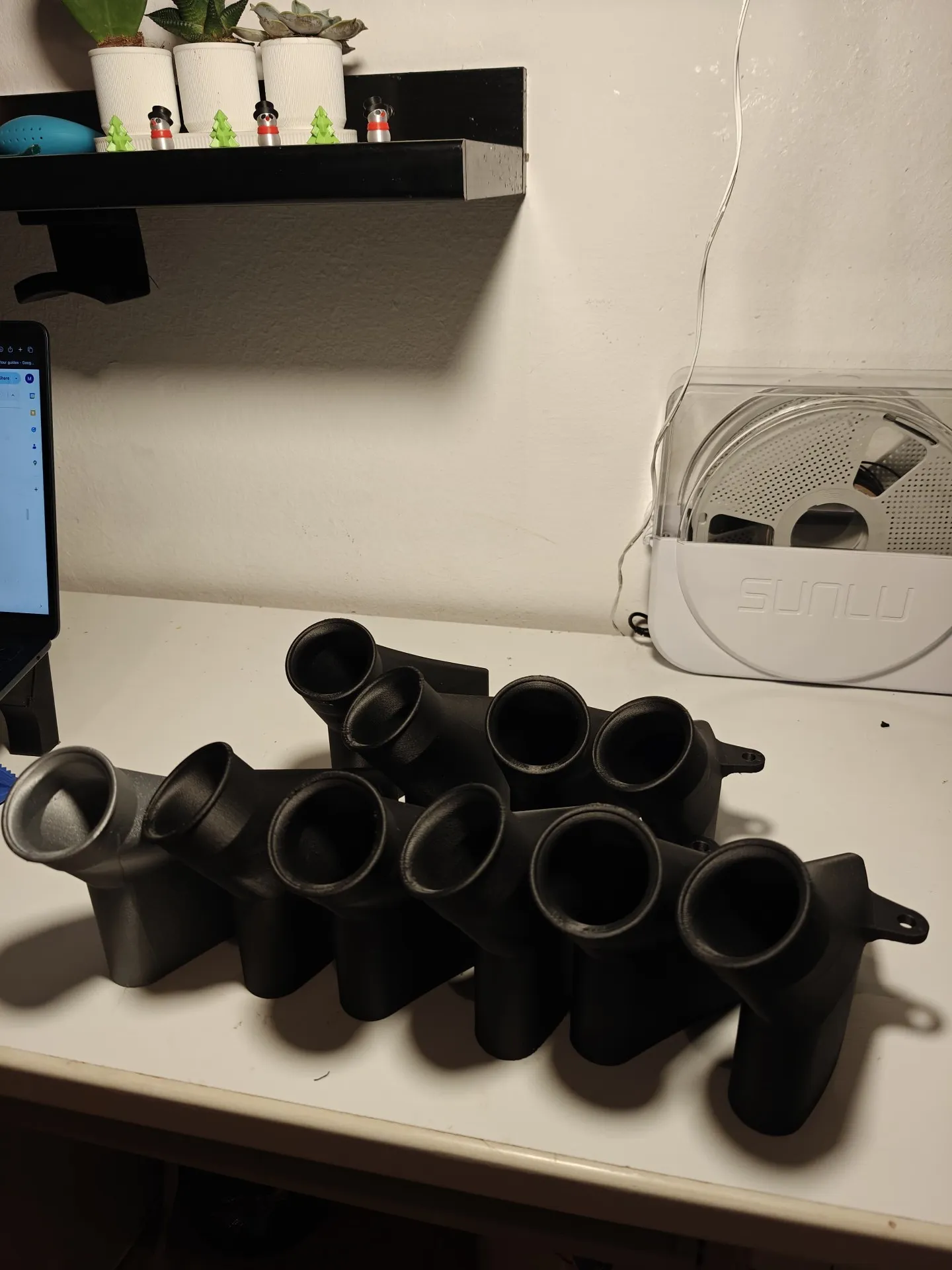
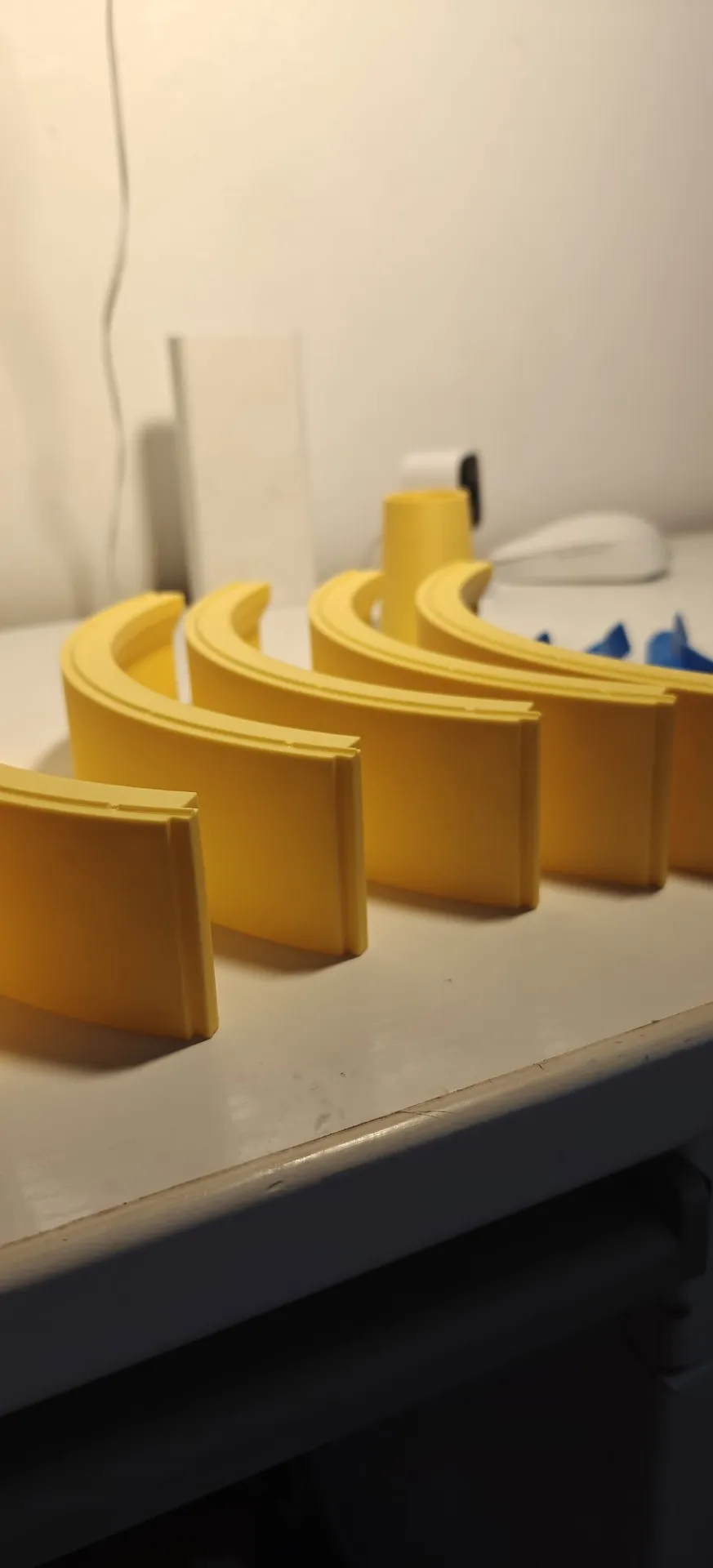
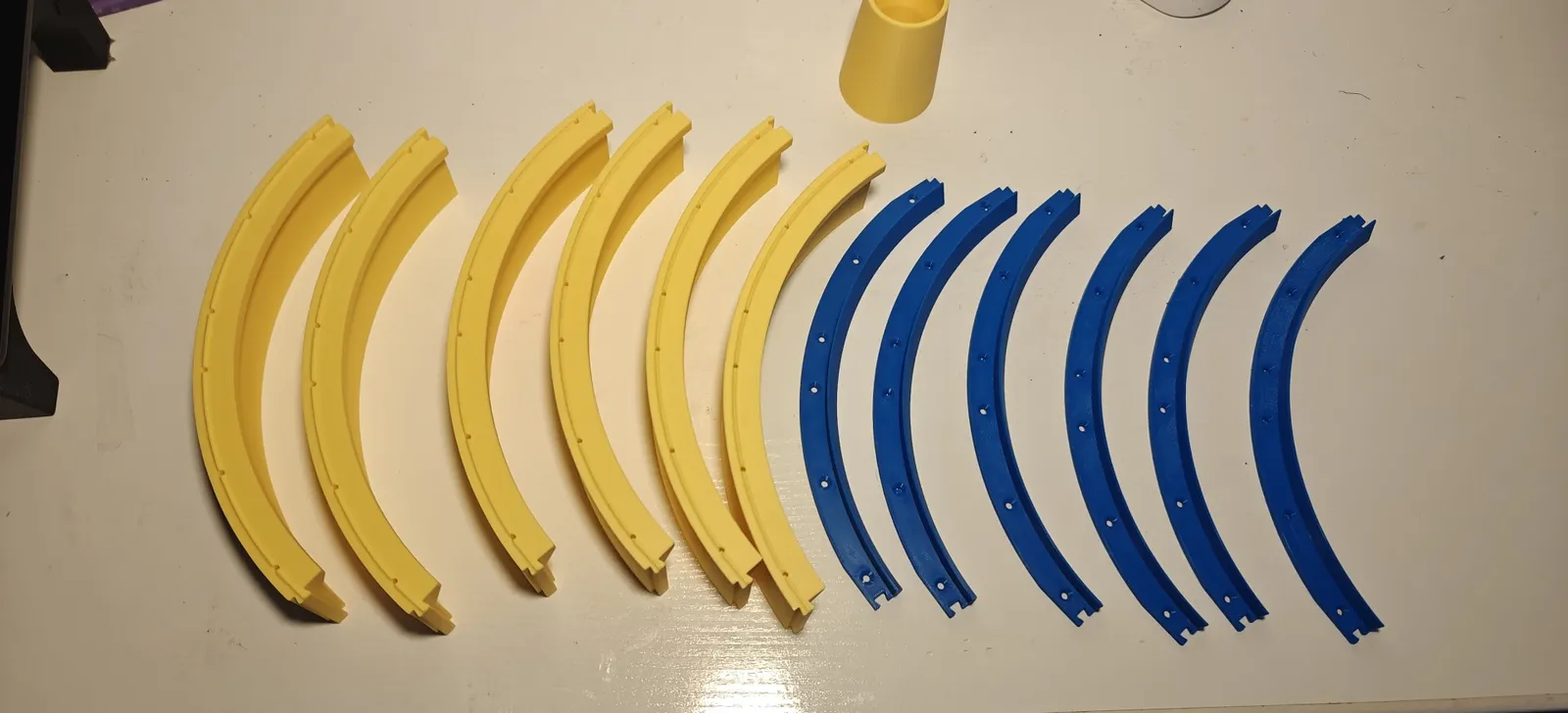
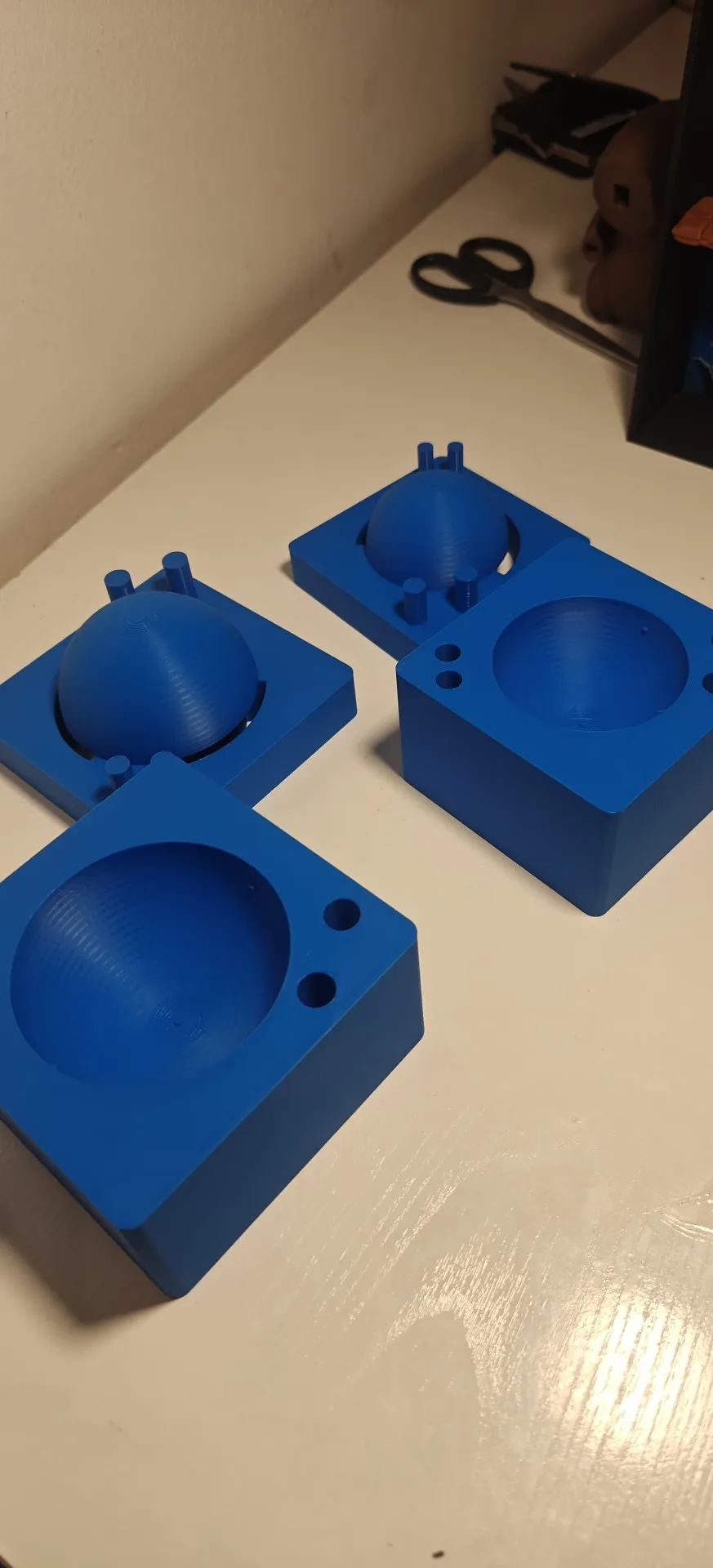
Real prints from our Barcelona workshop


Instant price — from €10
Upload your files — get an instant price
Upload your STL files — no account, no commitment.
Drop your files here
STL, OBJ, 3MF, GLB — or a photo of what you need
No 3D file? We'll design it from a photo or idea
Drop your files here
STL, OBJ, 3MF, GLB — or a photo of what you need
STL · 3MF · OBJ · STEP
No file? Send us a photo on WhatsApp
Drop your files here
STL, OBJ, 3MF, GLB — or a photo of what you need
No 3D file? We'll design it from a photo or idea
Default settings for all parts
Ready to start your project?
Send your file or describe your idea. Free quote in under 1 hour.
Frequently Asked Questions
Customer Reviews
Real feedback from customers we've worked with in Barcelona
"Excellent on-demand 3D printing service, very helpful and patient customer service. Recommended!"
"I'm working for a construction company. We needed a special round shadow gap profile for a wall, but there was no way to buy one because nobody sells it. So we decided to make it with the help of 3D printing. It was fast, affordable, and worked perfectly."
"Espectacular, compré dos maquetas de Stranger Things para los Funkos de Kinder Joy y quedaron geniales. Servicio y calidad de 10."
"Todo lo impreso está tal cual lo pedí. Gran calidad de impresión y persona seria y de confianza. 100% recomendable."
"Perfecto con las medidas exactas. Muy bien trabajado."
"Trabajo perfecto. Atención inmejorable. Muy contento."
Happy customers trusting Dimension3D for 3D printing in Barcelona and beyond
Worked with Dimension3D?
Share your experience and help others discover our service
All reviews are manually verified before publishing to ensure they come from real customers.