Dimension3D Barcelona
How to Get 3D Printing Customers — The Real Problem
The fastest way to get 3D printing customers is a combination of three moves: (1) set up a free Google Business Profile so you show up in local searches, (2) post one clear before/after photo on Instagram or WhatsApp Status, and (3) join a print network like Dimension3D's (free, no commission) so inbound orders come to you without you chasing them. Every other channel — Etsy listings, Facebook groups, B2B outreach — layers on top of this base. This page covers what actually converts a working printer into a steady flow of orders, with the timeline and effort stated honestly.
Google Business Profile — the free listing every maker skips
Google Business Profile (formerly Google My Business) is a free listing that puts your 3D printing service on Google Maps and in the local pack at the top of local search results. It is the single highest-leverage piece of free marketing for a location-based service, and most home-based makers never set it up.
What you need: a name for your service, a service area (you don't need a public storefront — a service-area business is a legitimate profile type), contact details, business hours, categories (3D printing service is a valid category), and photographs of your work. Google will verify the business, typically by postcard or phone, before the listing goes live.
Once live, encourage happy customers to leave a review. Reviews are the single largest signal Google uses to rank local businesses. Ten genuine reviews from real customers over a few months will outperform any amount of paid advertising for a small local service. Reply to every review, positive or negative, in a professional tone — that's visible to future customers too.
Joining an existing print network — orders that come to you, free to join
Everything else on this page is a channel you have to build yourself, and each takes months of consistency before it produces orders reliably. If you want a shorter path to real customer requests that you did not have to source yourself, joining an existing local print network is the low-friction option worth considering first.
The Dimension3D maker network is set up specifically for this, and the offer is deliberately simple:
• Joining is free — no signup fee, no application charge, no trial credit card. • No commission on your work — every euro a customer pays you stays with you. • No exclusivity clause — you continue using every other channel below (Google Business, marketplaces, direct clients) in parallel. • Terms are agreed individually with each maker before any work begins, so nothing is imposed generically. • Makers produce locally under the Dimension3D brand when orders arrive in their area.
How orders reach you: a customer searches for a 3D print in their city, lands on Dimension3D, submits an enquiry, and the request is routed to a maker in their local area — you keep your printer, you set the price, and the customer pays you directly. Dimension3D never touches the money.
The network is expanding city by city, so the volume of requests you'll see depends on the real demand in your city — a maker in a market where the brand is already established will see more requests than one where the network has just launched. There are no guaranteed numbers and no promised monthly volume. What is guaranteed is that joining costs nothing and there is no lock-in — if orders don't come yet in your city, you haven't lost anything.
Apply on [/makers](/makers). See [/maker-guide](/maker-guide) for the full workflow — how orders reach you, how quoting works, and how payment goes directly from customer to maker.
Everything below this section is what to do in parallel — building your own visibility through marketplaces, photography, pricing, response speed and repeat customers.
Prefer orders that come to you?
Free to join, no commission, no exclusivity — orders from your area go directly to you.
Local marketplace listings — where people already look
In Spain, Wallapop is where people go when they need something specific and want to see local sellers. In France, Leboncoin. In Germany, Kleinanzeigen (formerly eBay Kleinanzeigen). Etsy and eBay cover cross-border reach. Each has its own dynamics; the common thread is that people are already there, actively looking.
What performs well on classifieds: specific practical items (name plates, phone stands, cable organisers, custom keychains, cake toppers), replacement parts described specifically enough that someone searching for the exact problem finds them, and personalised gifts with a clear photo of what the customisation looks like.
What doesn't work: generic listings with no photograph, prices with no context, or copy that doesn't say what the item does. Compete on clarity, not on being the cheapest. The cheapest listing on every marketplace is usually one you don't want to be underbidding.
Photographing your prints properly — the single biggest lever
The gap between a listing that sells and one that doesn't is very often the photograph. Prints on a cluttered desk under harsh overhead lighting look worse than the object actually is. Prints on a clean background in soft daylight look like a professional catalogue.
The minimum practical setup for good product photography of a 3D print: a plain background (a folded white sheet, a piece of foamcore, a lightbox if you're serious), soft indirect daylight or a cheap softbox lamp, a phone camera held steady (a tripod, a stack of books, anything), and multiple angles including one that shows the object at the correct scale (either next to a coin, a hand, or a familiar object).
One genuinely well-lit photograph with a clean background will outsell three phone snaps taken quickly on the workshop floor. It costs nothing except twenty minutes of setup and re-use across every listing you post.
Transparent pricing — remove friction, not margin
Every customer message you receive that asks 'how much does this cost' is a message you didn't need to spend time on. Transparent pricing published up front (whether as a table, a per-gram figure, a minimum order value, or a set of common item prices) converts casual browsers into customers because they can decide without having to interact with a stranger.
What to publish: your minimum order value (this alone filters out the requests that were never going to be profitable), typical prices for the categories of work you actually do (a per-gram rate, a starting-from figure for common items), and any surcharges or discounts that consistently apply (urgent surcharge, quantity discount for larger batches). You do not need to publish every possible price — you need to publish enough that the customer knows whether they're in your general range before they contact you.
Hiding pricing 'to preserve flexibility' loses more sales than it protects. Customers who never got a rough number will assume the worst and move on.
Response speed — the underrated competitive advantage
In service work, the first responder frequently wins the job. If a customer sends the same enquiry to three makers and one replies within thirty minutes, one within four hours and one the next day, the fast responder gets the order most of the time — regardless of who was cheapest.
What this looks like in practice: keep WhatsApp notifications on during your working hours, reply with at least an acknowledgement even if the full quote will take longer, and set expectations honestly ('I'll have a full quote by tonight' beats silence for four hours). A short polite acknowledgement message within minutes is worth more to conversion than a beautifully-formatted quote sent six hours later.
This is not about being on-call at 2 a.m. — it's about defining your response window (say, weekdays 9 a.m. to 8 p.m.) and being consistently fast within it. Publish that window somewhere visible so customers who message outside it know when to expect an answer.
Repeat vs one-off customers — where the real business is
One-off customers pay the bills on Tuesday. Repeat customers are the actual business. A customer who ordered a bracket in March, a personalised gift in June and a small batch of prototypes in September is worth many times more, over a year, than three unrelated first-time buyers — and cost far less to acquire because you already have their trust.
The simplest thing you can do to encourage repeat business: keep the customer's file on record so a reorder takes minutes rather than starting from scratch, follow up briefly after delivery to check the part worked as expected (this is genuinely rare and it stands out), and remember what they ordered so the next conversation starts warm rather than cold. Small businesses that order once for a specific need often come back for the next one if the first experience was good and the friction to reorder is low.
Most consumer channels (marketplaces, classifieds) actively discourage direct repeat business by pushing communication back through their platform. Local relationships and direct-contact customers are where the compounding happens.
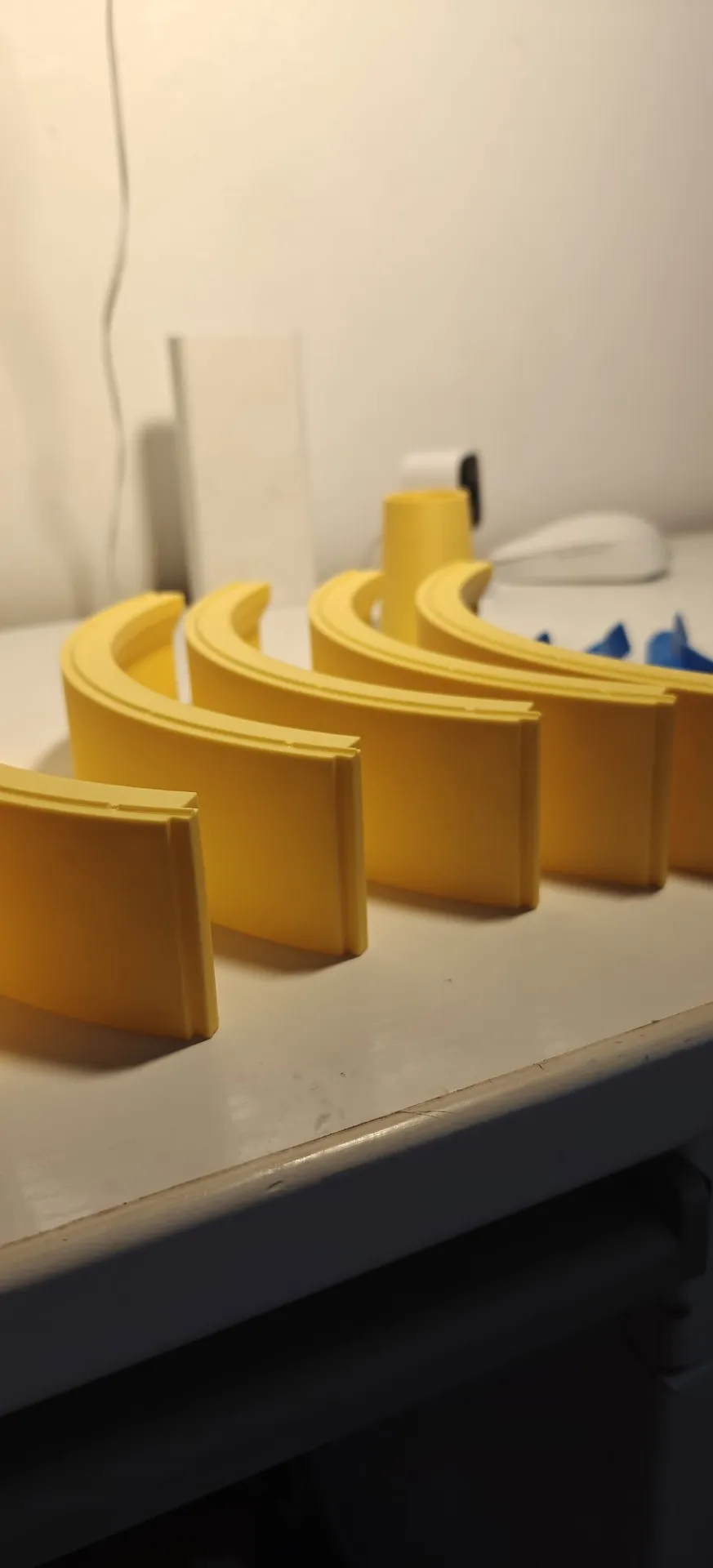
Real prints from our Barcelona workshop



Start earning with your 3D printer
Free to join. No fees, no commission, no exclusivity. Orders from your area go to you.
Frequently Asked Questions
Customer Reviews
Real feedback from customers we've worked with in Barcelona
"Excellent on-demand 3D printing service, very helpful and patient customer service. Recommended!"
"I'm working for a construction company. We needed a special round shadow gap profile for a wall, but there was no way to buy one because nobody sells it. So we decided to make it with the help of 3D printing. It was fast, affordable, and worked perfectly."
"Espectacular, compré dos maquetas de Stranger Things para los Funkos de Kinder Joy y quedaron geniales. Servicio y calidad de 10."
"Todo lo impreso está tal cual lo pedí. Gran calidad de impresión y persona seria y de confianza. 100% recomendable."
"Perfecto con las medidas exactas. Muy bien trabajado."
"Trabajo perfecto. Atención inmejorable. Muy contento."
Happy customers trusting Dimension3D for 3D printing in Barcelona and beyond
Worked with Dimension3D?
Share your experience and help others discover our service
All reviews are manually verified before publishing to ensure they come from real customers.