Dimension3D Barcelona
FDM vs SLA vs SLS — 3D Printing Technology Comparison
Three technologies dominate professional 3D printing services: FDM (fused deposition modelling), SLA (stereolithography / resin), and SLS or MJF (powder-bed fusion). Each has real strengths and real limits. This page compares them across the dimensions that matter most — surface detail, mechanical strength, material range, cost per part, and typical use case — and tells you honestly which to choose, including when FDM is not the right answer.
FDM — what it is and where it excels
Fused deposition modelling works by melting a thermoplastic filament and depositing it layer by layer to build the part. It is by far the most widely available 3D printing technology, covering the widest range of materials, the largest build volumes, and the lowest cost per gram of any mainstream process.
FDM genuinely excels at functional parts. A bracket that needs to bear load, a housing that needs to survive impacts, a replacement part that needs to fit a specific interface, a prototype that needs to be tested under real conditions — these are applications where FDM performs reliably and cost-effectively. The material range is a particular strength: PLA for cost-effective indoor work, PETG for outdoor exposure, ASA for UV-stable outdoor structural parts, TPU for flexible applications, Nylon and carbon-fibre variants for maximum performance.
Layer lines are visible on FDM parts — this is an inherent consequence of the deposition process, not a quality defect. For functional parts the lines are irrelevant. For display or presentation parts, sanding, priming, and painting can produce a smooth finish. If surface texture is a hard requirement, see SLA below.
SLA and resin — where it genuinely outperforms FDM
SLA (stereolithography) and its variants (MSLA, DLP) use UV light to cure a liquid resin layer by layer. The resolution is much finer than FDM because the process is not constrained by a nozzle diameter — detail features as small as 0.05 mm are achievable on consumer-grade resin printers.
SLA is genuinely the better choice for applications where surface quality is the primary requirement: jewellery masters for casting, dental models, scale miniatures intended for display, product renders at prototype stage. If you need to capture facial expressions in a figurine, replicate fine mechanical detail, or produce a surface that will be painted for display, SLA produces a result that FDM cannot match without extensive post-processing.
The trade-offs are real, however. Resin parts are typically more brittle than FDM parts — they handle compression well but fracture under sharp impact. The material range is limited compared to FDM engineering filaments. Build volume is smaller on most resin printers. And the post-processing requirement (UV washing and curing) adds steps to the workflow.
We do not offer SLA printing. If your project's primary requirement is maximum surface quality and the part will not be subjected to significant mechanical load, we will tell you honestly that a resin print from a specialist service is the better fit.
SLS and MJF — industrial powder-bed fusion
Selective laser sintering (SLS) and HP's multi jet fusion (MJF) are powder-based processes that sinter or bond polymer particles without any support structure. The absence of supports is the key practical advantage: internal channels, undercuts, and complex interlocking geometry that would require extensive support in FDM or SLA print without constraints in SLS/MJF.
The mechanical properties are excellent. Because powder-bed fusion parts are fully isotropic — equal strength in all directions — they behave more like injection-moulded parts than FDM prints, which have a measurable Z-axis weakness from layer bonding. For end-use parts that will be loaded in multiple directions, SLS/MJF strength characteristics are superior.
The practical barrier is cost. SLS and MJF require industrial equipment, and the per-part economics only become competitive with FDM at volumes that justify the setup overhead. A single bracket in SLS costs several times more than the same bracket in FDM Nylon. We do not offer SLS or MJF — they are not cost-effective for the part volumes and applications most of our customers bring us.
When FDM is not the right choice
We print in FDM and we believe it is the right technology for the majority of practical 3D printing applications. But there are cases where it genuinely is not.
• If surface quality is the primary requirement and post-processing is not viable — a display-quality figurine, a jewellery master for casting, a dental model — SLA will produce a better result.
• If the part has complex internal geometry or interlocking features that would require extensive support removal — and support removal would damage or distort the part — SLS/MJF is better suited.
• If the part will be loaded in all three axes simultaneously and isotropic strength is required — not just XY strength — SLS/MJF Nylon outperforms FDM Nylon.
In any of these cases, we will tell you directly. We would rather help you find the right process than take an order that will disappoint.
How to choose the technology for your project
Start with the functional requirements, not the technology:
1. What is the part for? Structural load, visual display, flexible sealing, complex internal geometry? 2. What surface finish is acceptable? Layer lines fine, or smooth required? 3. What is the operating environment? Indoor, outdoor, heat-exposed, impact-prone? 4. What is the budget and timeline?
For most functional parts — prototypes, replacement parts, brackets, housings, props, tools — FDM covers the requirement well, at the lowest cost and fastest lead time. If your answers to the questions above point to surface quality as the primary requirement, or to complex unsupported geometry, or to fully isotropic mechanical properties, describe those requirements explicitly when you request a quote. We will give you an honest recommendation, including if that recommendation is a different provider or technology.
| Technology | Surface Detail | Mechanical Strength | Material Range | Cost Per Part | Typical Use Case | Available at Dimension3D? |
|---|---|---|---|---|---|---|
| FDM (Fused Deposition Modelling) | Good — layer lines visible; smoothable with post-processing | Very good in XY plane; layer-bonding (Z) is the weak axis | Wide: PLA, PETG, ABS, ASA, TPU, Nylon, CF variants and more | Low–Medium | Functional parts, prototypes, enclosures, brackets, replacement parts | ✓ Yes — our primary technology |
| SLA / Resin | Excellent — finest surface detail of any mainstream process | Good in compression; brittle under sharp impact load | Mostly rigid standard resins; engineering and flexible resins exist | Medium–High | Jewellery masters, dental models, display miniatures, parts requiring very high surface quality | ✗ Not offered |
| SLS / MJF (Powder-Bed Fusion) | Good — no support witness marks, smooth matte finish | Excellent — fully isotropic (equal strength in all directions) | Nylon PA12, PA11, TPU (SLS); broader range with MJF | High | Low-volume end-use parts, complex geometry, thin interlocking features without support constraints | ✗ Not offered |
FDM is our primary technology. SLA and SLS/MJF are industry alternatives offered by other providers — included here for an honest comparison.
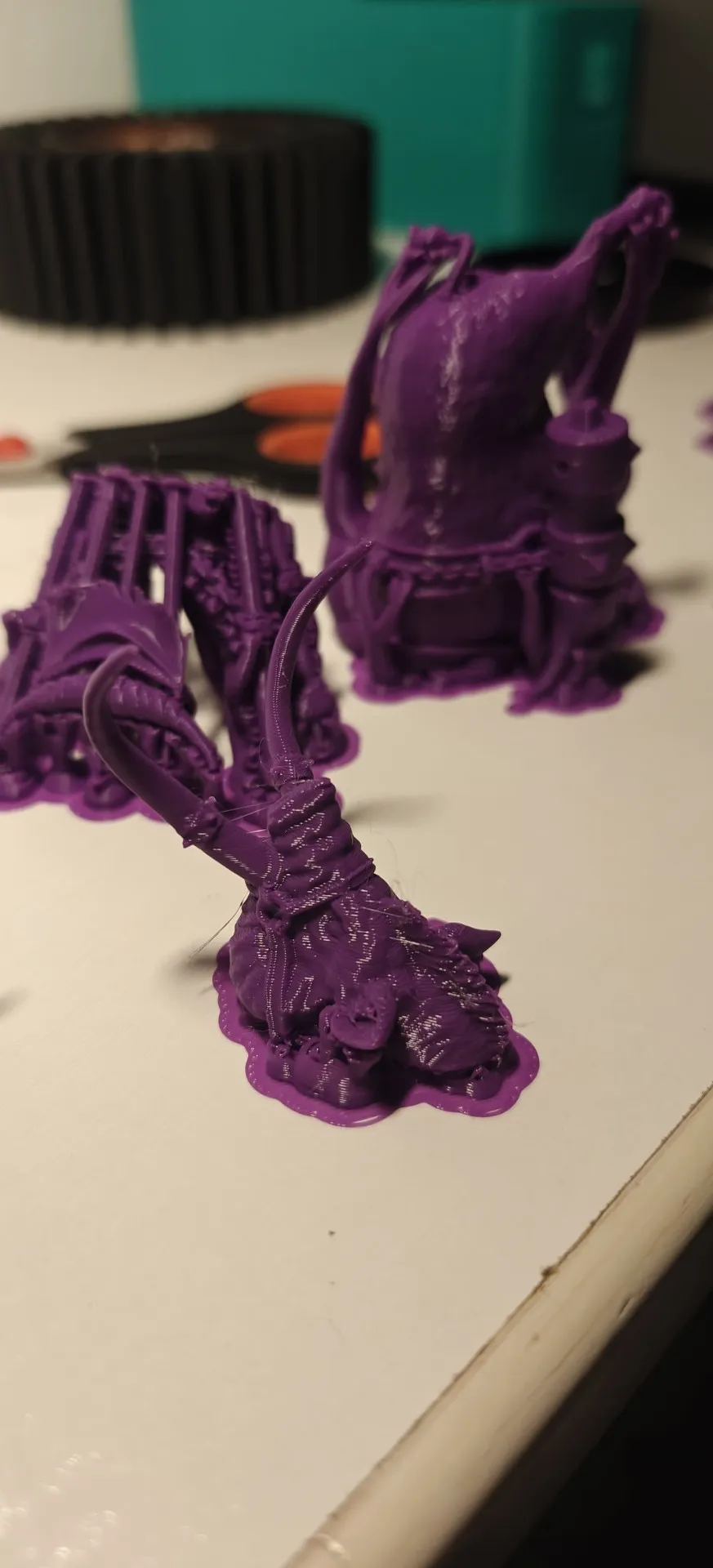
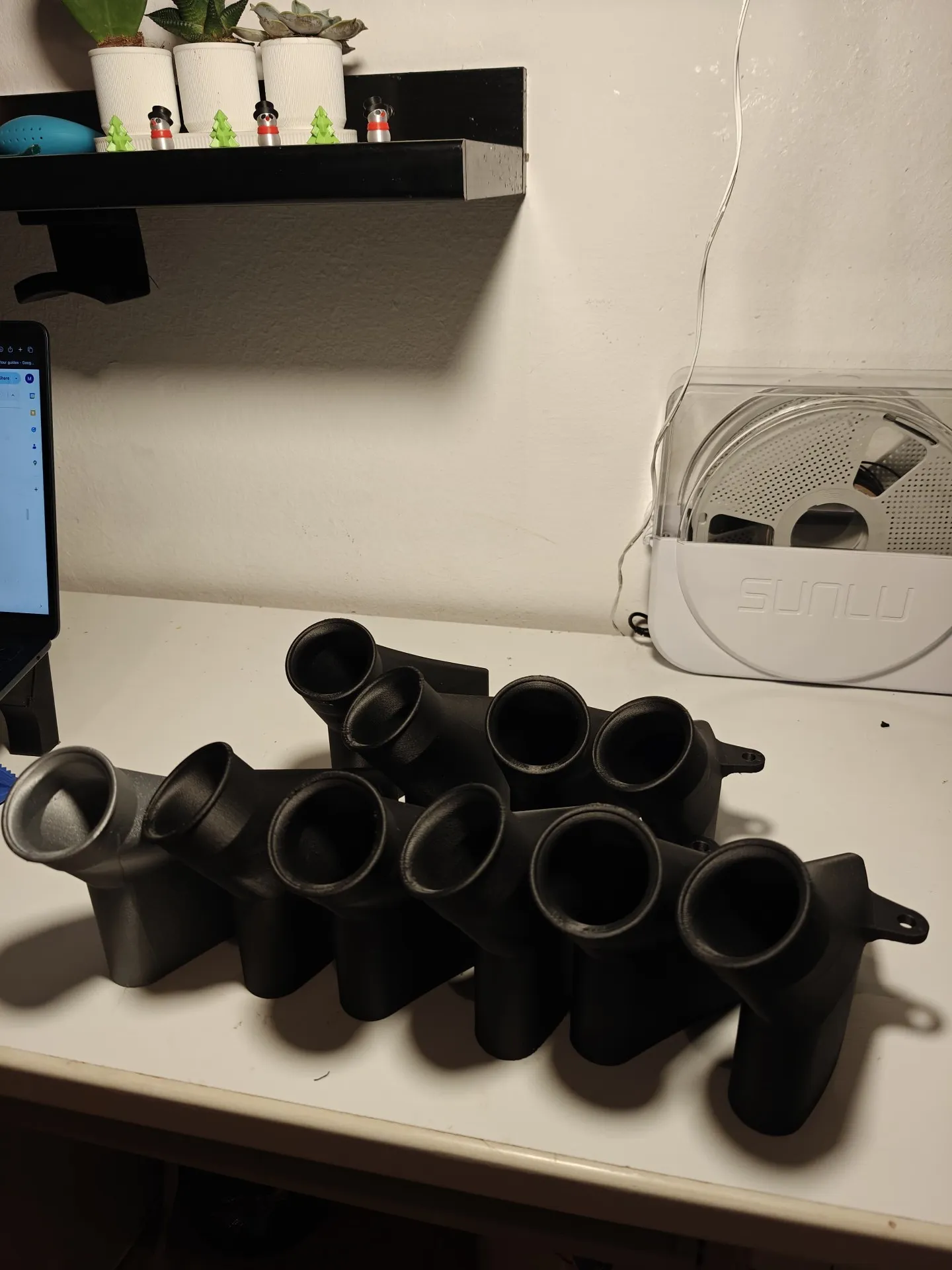
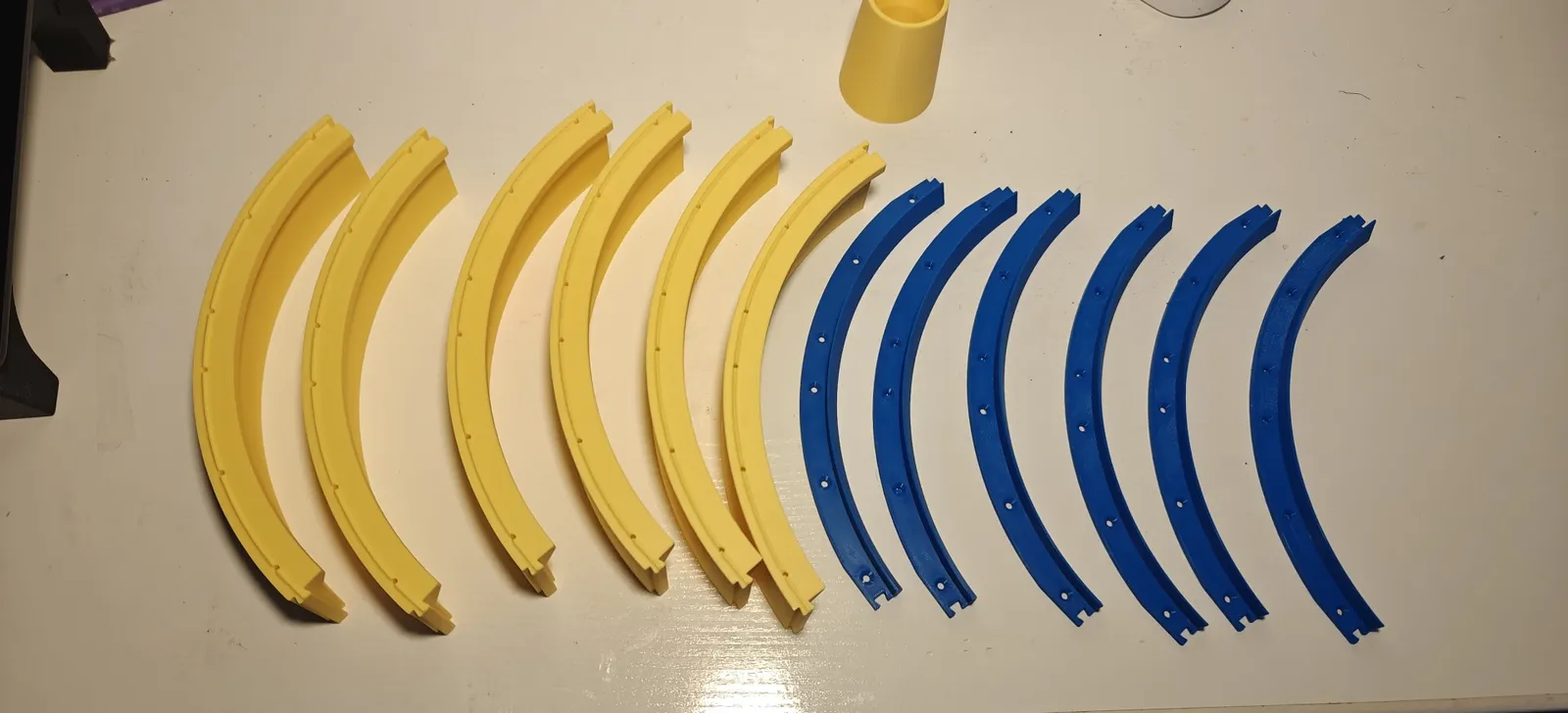
Real prints from our Barcelona workshop



Instant price — from €10
Upload your files — get an instant price
Upload your STL files — no account, no commitment.
Drop your files here
STL, OBJ, 3MF, GLB — or a photo of what you need
No 3D file? We'll design it from a photo or idea
Drop your files here
STL, OBJ, 3MF, GLB — or a photo of what you need
STL · 3MF · OBJ · STEP
No file? Send us a photo on WhatsApp
Drop your files here
STL, OBJ, 3MF, GLB — or a photo of what you need
No 3D file? We'll design it from a photo or idea
Default settings for all parts
Ready to start your project?
Send your file or describe your idea. Free quote in under 1 hour.
Frequently Asked Questions
Customer Reviews
Real feedback from customers we've worked with in Barcelona
"Excellent on-demand 3D printing service, very helpful and patient customer service. Recommended!"
"I'm working for a construction company. We needed a special round shadow gap profile for a wall, but there was no way to buy one because nobody sells it. So we decided to make it with the help of 3D printing. It was fast, affordable, and worked perfectly."
"Espectacular, compré dos maquetas de Stranger Things para los Funkos de Kinder Joy y quedaron geniales. Servicio y calidad de 10."
"Todo lo impreso está tal cual lo pedí. Gran calidad de impresión y persona seria y de confianza. 100% recomendable."
"Perfecto con las medidas exactas. Muy bien trabajado."
"Trabajo perfecto. Atención inmejorable. Muy contento."
Happy customers trusting Dimension3D for 3D printing in Barcelona and beyond
Worked with Dimension3D?
Share your experience and help others discover our service
All reviews are manually verified before publishing to ensure they come from real customers.